
Solidarity with The Swamp
Ecologies of Solidarity Against (Eco)Fascism
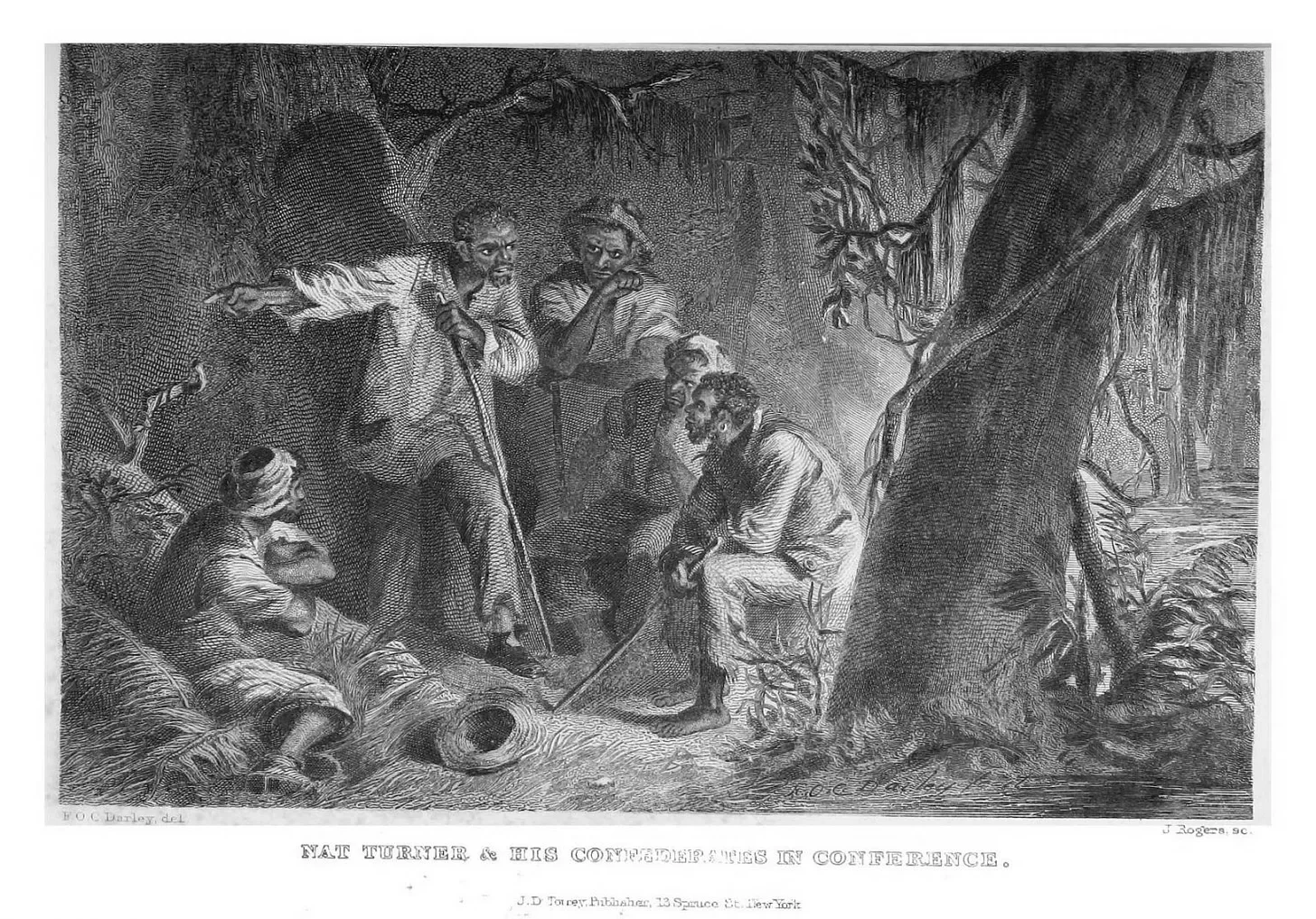
HathiTrust Digital Library
When Trump says “drain the swamp” what he means has little to do with Washington. Ever since colonizers reached these shores, they've fought nature to make resistance impossible.
The regulations he says he’s “drowning” under preserve your social security, your child’s access to health care, your right to protest. By draining the swamp, he wants ever protection you’ve ever received to disappear, the way other colonizers, terrorists, and tyrants clear-cut the forests or the nation, dammed the rivers, and removed the tops of mountains.
The other colonizers, too, drained swamps because of their place as “almost mythical” sites of Black “resistance and rebellion.”
Historically, The Swamp has been a site of Black and indigenous solidarity, resistance, autonomism, magic, and medicine.
This is easiest to study in the Great Dismal Swamp, but isn’t exclusive to it.
There are many swamps called “Dismal Swamp,” so deeply did the colonizers hate swamps. I grew up with a swamp one town over in fact, which the Lenni Lenape called Maniquescake. It was renamed for a white man in 2021, so it is no longer called solely “Dismal Swamp,” though it will always, of course, be Maniquescake.
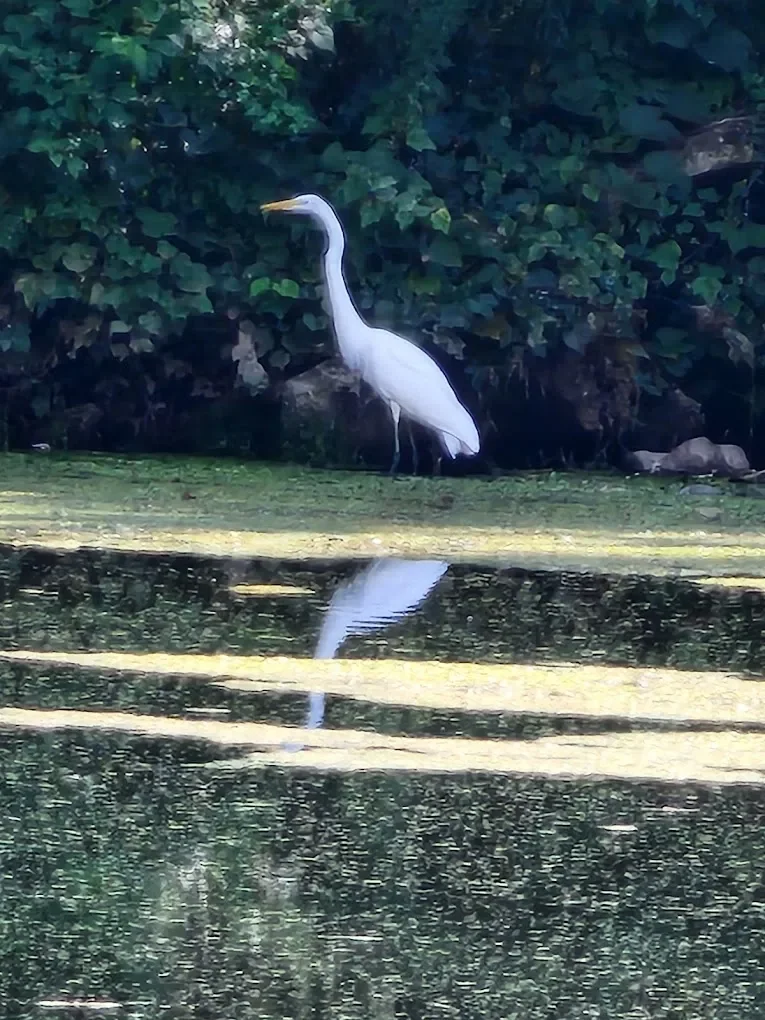
Thomas Dowling, 2025
Anthony E. Carlson says as much in "The Other Kind of Reclamation: Wetlands Drainage and National Water Policy, 1902–1912":
"Colonists and nineteenth-century Americans regarded wetlands as a threat to progress and prosperity. Wetlands impeded travel, harbored dangerous animals, provided sanctuary for fugitive slaves, locked land out of agricultural production, depressed property values, and were thought to release miasmas into the atmosphere blamed for a host of febrile illnesses."
It should come as no surprise that "drain the swamp" is a rallying cry as old as this country.
Allen recounts Colonel William Byrd's call for the same in "Wild Paradise: Hope in the Great Dismal Swamp." Byrd "believed that the Great Dismal Swamp and its air were so foul, no living thing could survive there, and birds would not fly over it." He is also, Allen writes, "credited with naming it."
Byrd thought it best to "drain the swamp" and make it a farm instead. He was a slaver, of course, so we can presume that like his other farms, it would be a torture camp.
There's an easy parallel here between Byrd and Trump's call to "drain the swamp." Trump's draining of the metaphorical swamp contains literal ecological devastation. Byrd's literal draining of the swamp, too, contains a metaphor Trump would love.
It says destroy whatever mystery disgusts me. Get rid of all I cannot control because I cannot enter it. Remove anything I cannot surveil, patrol, or lord over.
One of the ways the colonizer destroys nature is by defining what “nature” means.
The colonizer defines human nature as violence, as theft, as ecological devastation, and individualism—and turns his head from whatever proves him wrong. This is what Trump seeks when he calls on his allies to drain the swamp.
The swamp and what goes on there constantly proves him wrong, and so he insults the swamp, then tries to change the swamp’s nature through Euro-American style agriculture, and if he cannot do that, he drains the swamp.
The colonizer hates the swamp because it is a reminder that humans will never win a fight against nature, which feeds, shelters, and clothes us.
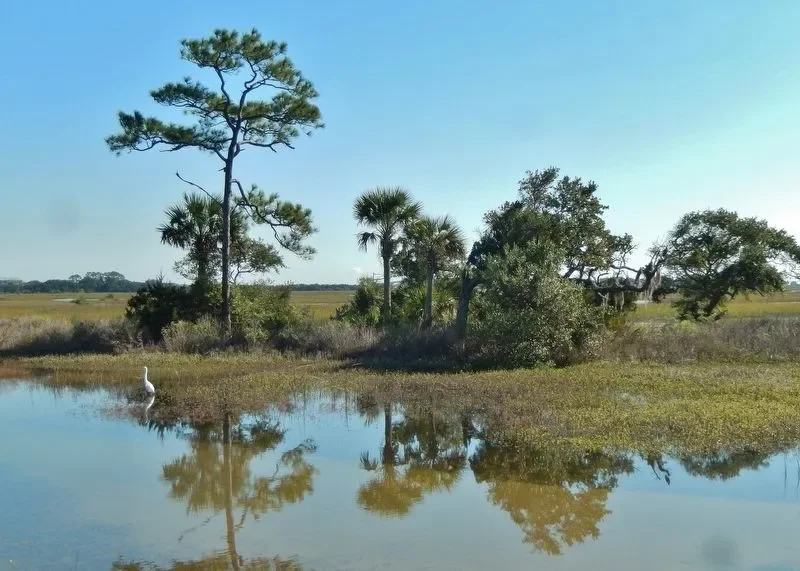
Fort Mose Historic State Park
Colonizers associated the swamp with Indigenous resistance and “African freedom seekers” as Modibo Kadalie calls them in Intimate Direct Democracy: Fort Mose, The Great Dismal Swamp, and the Human Quest for Freedom.
“Swamps were obstacles to most kinds of cash-crop cultivation and hostile to the development of products for the emerging global market,” Kadalie writes.
Thousands of self-emancipated people lived in swamps, alongside indigenous people and were supported by the food, shelter, and medicine that they grew alongside. Kadalie writes that “Indigenous peoples and African freedom seekers [in the swamp] were largely reliant upon nature for their basic subsistence.” These communities were autonomous, “self-governing,” “self-organized eco-communities of formally enslaved people” living “within the confines of the great swamps.”
Their very existence in the swamps defied the colonizers beliefs about ecological and human nature. Solidarity undercuts the colonizer’s belief in individualism. Self-governance reveals the colonizer’s demands for strict hierarchy and scarcity as a preference and a myth in turn. Self-emancipation was and remains proof that even under the most torturous conditions, humans will successfully resist.
At present, this resistance reminds me of the fight to defend Weelaunee Forest, which is Muscogee land, from becoming a training village for militarized police and a movie studio. Even seeming like you love the land can make you subject to fascistic control: twenty-three people were arrested for “terrorism” for being potential forest protectors because they had mud on their shoes and clothes.
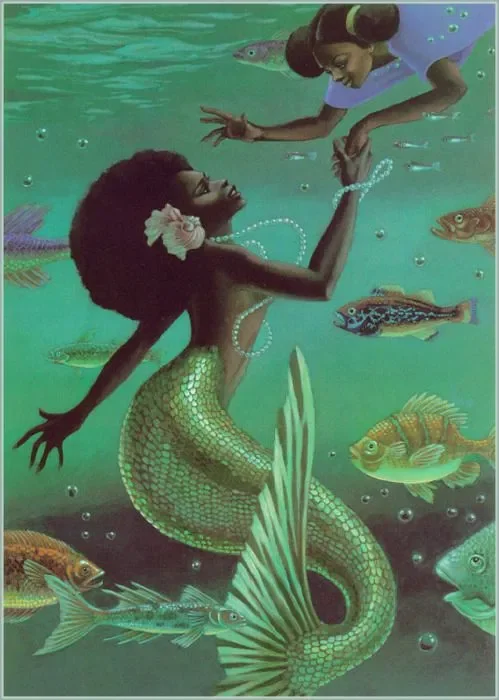
Her Stories: African American Folk Tales, Fairy Tales, and True Tales x Virginia Hamilton Illustrations x Leo and Diane Dillon.
I cannot stress enough that those who hate the swamp, who hate the land so much they built a human trafficking empire called chattel enslavement so they did not have to touch it, hate you too.
They hate the land because they hate you and don’t want you or your spirit to be free. They hate you because they know, deep down, that they will always lose. Perhaps not in the short term, but they have no path to victory in the long term.
Anyone who has lived, as I have, atop a flood plain knows that there’s no stopping water forever. Drained wetlands come back to flood. They always remember their name and come when summoned.
Water spirits, which live in all indigenous bodies of water, and who know us expect us to fight with them, I feel. After all, they’ve suffered beside us, even died beside us.
We fight our fight with the swamps. We fight our fight with the rivers, and the ocean — even the brook and the stream. The lake, the bog, and the fen are our friends and allies. We are bodies of water in solidarity with bodies of water. We must remember our names, and act in solidarity with our oldest friends.
Cited
ALLEN, RIDWAANA. “Wild Paradise: Hope in the Great Dismal Swamp.” Southeastern Geographer, vol. 61, no. 1, 2021, pp. 1–4. JSTOR, https://www.jstor.org/stable/27094604. Accessed 15 Mar. 2025.
CARLSON, ANTHONY E. “The Other Kind of Reclamation: Wetlands Drainage and National Water Policy, 1902–1912.” Agricultural History, vol. 84, no. 4, 2010, pp. 451–78. JSTOR, http://www.jstor.org/stable/27869012. Accessed 15 Mar. 2025.
Kadale, Modibo. Intimate Direct Democracy: Fort Mose, The Great Dismal Swamp, and The Human Quest for Freedom. 2022. On Our Own Authority Publishing.
Gounari, P. 2018. Authoritarianism, Discourse and Social Media: Trump as the ‘American Agitator’. In: Morelock, J. (ed.) Critical Theory and Authoritarian Populism. Pp. 207–227. London: University of Westminster Press. DOI: https://doi.org/10.16997/book30.j. License: CC-BY-NC-ND

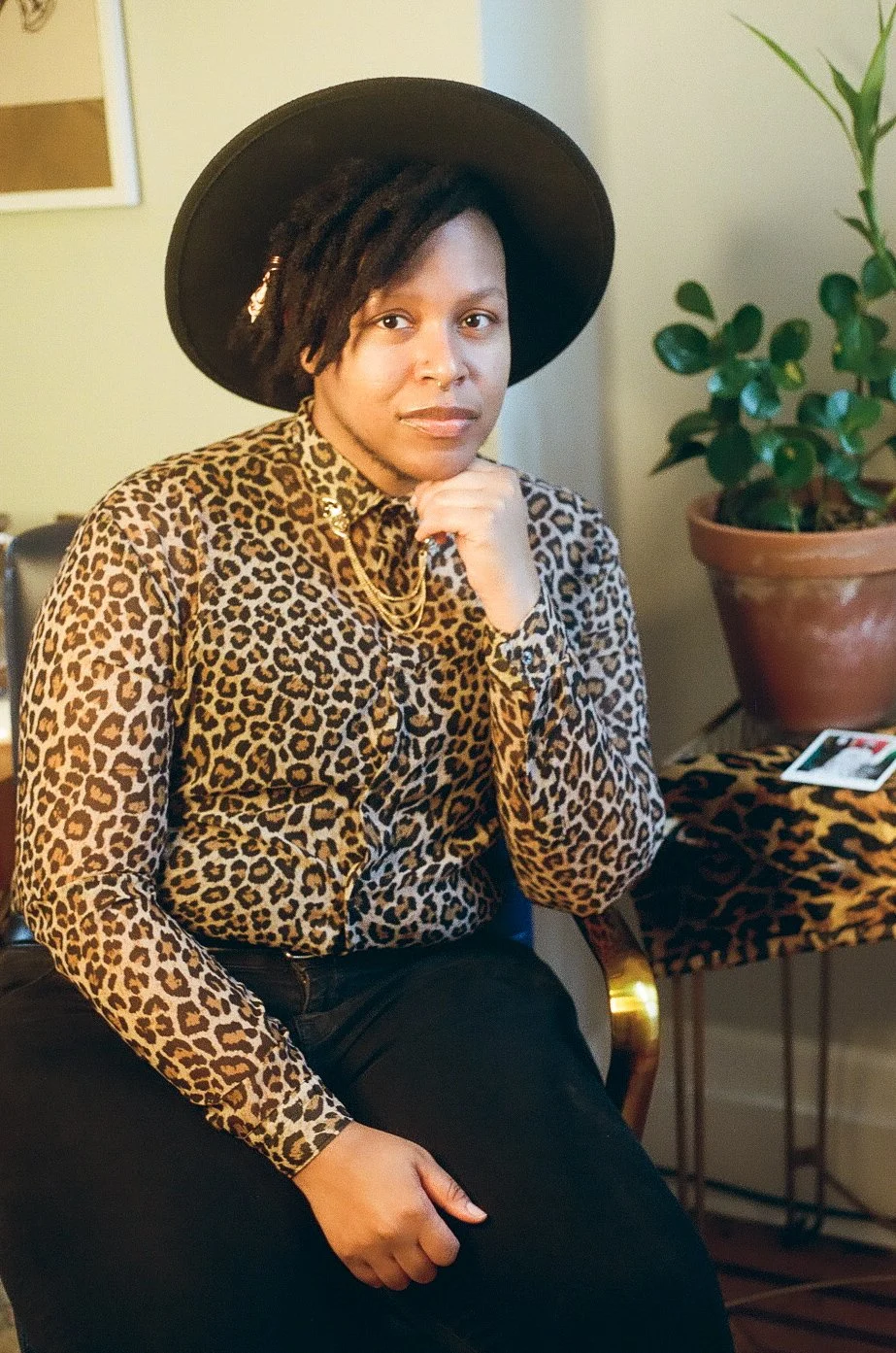
Hey, I’m Cyrée
I’m a rootworker, diviner, and clinical herbalist. I believe that spirit work is an essential part of all movements for justice. I hope you’ll take a look around, there are plenty of opportunities here to deepen your connection with your gifts (with my guidance.)
Though a medicinal rootworker may look the same as a clinical or community herbalist to the untrained eye, there are important differences between the work of most rootworkers and that of an herbalist working in another tradition.