
Sleeping and Surviving
Relaxant Nervine Herbs to Meet the Moment

Facism is emboldened. The economy is in the tubes. And we all still have to get up and do the damn thing in the morning — if we’re sleeping at all, that is.
Well, are you sleeping?
Personally, sleep hygiene is a must for me, because autism and insomnia love to hold each other’s hands. I was an insomniac (with a paper route) before I hit puberty. So two melatonins, forty-five drops of valerian and thirty of passionflower an hour before bed are my version of a nightly lullaby. I don’t miss it.
Especially now, when Balm in Gilead, my brick and mortar herb store in Kingston, NY, opens in about seven weeks. I'm spending most of my time these days setting up shop, so I gotta make sure I’m catching those ZZZZs, honk-shoos, and miii-miii-miis.
If I’m not sleeping, I’m not dreaming. If I’m not dreaming, I’m missing vital information, time to regenerate my cells and brain, and time with my ancestors. I will always prioritize sleep in the face of fascism, and whatever comes after it too.
I went into the store yesterday, though we're on spring break until next week, to sweep and mop in religious ways and make a couple tinctures.
My practice has a heavy focus on living with complex trauma and mental illness.
As such, it should come as no surprise that I made a whole bunch of Night Light, a tincture full of nervine herbs that may relax the body/mind for sleep.
Nervines are plants that could be beneficial to our nervous systems. They may nourish, soothe, or stimulate -- some in the long term, and others in the short.
Like most plant medicine, they are generally worked with over a longer period of time. Plant medicine can sometimes take longer to work than Western allopathic medicine.
Working with herbs isn't one size fits all, which is why it's great to work with an herbalist to find out what plant allies may work best for you.
If you would like to work with me, you can do that by scheduling a consultation with me here.
Night Light is full of nervine relaxants, including Skullcap, Chamomile, and Passionflower.
Night nervines are great for those of us who can't or don't work with brain meds --- no judgement or endorsement either way, by the way. What's best for you may be different from what I need!
The reason I mention those of us who don't take brain meds is that some nervines may interact with those meds. This includes herbal nervines you probably hear about a lot, like St. John's Wort. (St. John's Wort interacts with a lot of stuff though.)
For those of us who aren't taking psych meds, but who still want to tend to our minds, night nervines may help us sleep and manage moods during the day.
My personal mind mending routine includes both day and night nervines. But as an autistic person with OCD, insomnia is a MAINSTAY in my life. So I was like, “lemme make sure Balm in Gilead has something for sleep.”
[NEED VIDEO]
But while I was shaking Night Light, (shaking is a huge part of an herbalist's practice) I was like, “what was Harriet Tubman making babies go to sleep with?”
Which sent me to the internet to figure out what she was working to send the littlest travelers to slumberland.
Most sources I consulted report that it was laudanum, a tinture of the seed pods of the opium poppy, Papaver somniferum. Some also added that it was deployed on bread, which is brilliant, because parts of the opium poppy can be emetic, i.e. make you throw up.
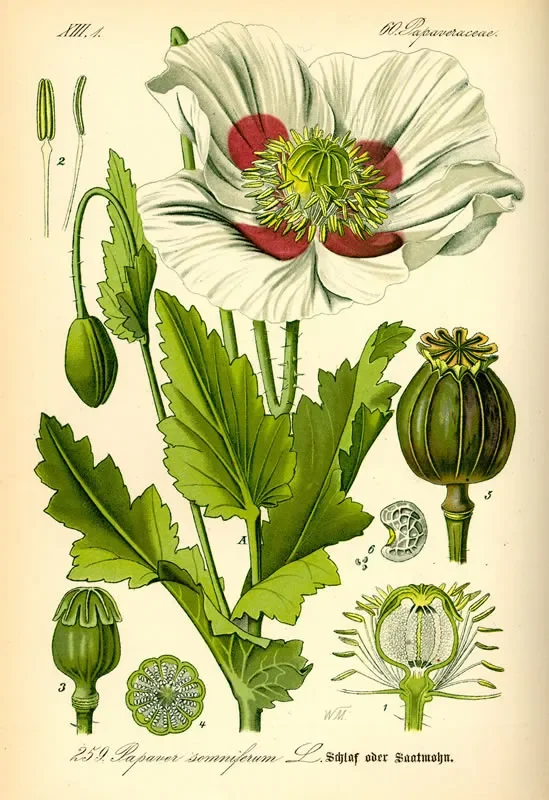
Opium poppy (Papaver somniferum). Illustration by Prof. Dr. Otto Wilhelm Thomé Flora von Deutschland, Österreich und der Schweiz 1885, Gera, Germany.
Laudanum wasn't regulated, so this answer makes total sense. It was a patent medicine, and in the 1800s it was sorta just...around. It wasn't even taxed as alcohol. It was analgesic (took away pain) and also soporific (makes you go to sleep.)
I’m definitely someone who struggles with the blanket assertion that rest is resistance. That said, it’s undeniable that our ancestors weren’t allowed to sleep, rest, sit down, or even give birth in peace. But sleep and rest are a human birthright. It keeps us alive on a literal, physical, cellular level. We have to do it.
I don’t think rest is inherently and automatically resistance; I don’t think eating is resistance. Yet I sleep, and eat, and wash my body, because I deserve care. If it fells the state, it fells the state. But if it doesn’t I’m not going to stop.
I think the narrative has arced towards a silent and rest is enough. Like, sure, but enough for what? It’s totally possible that we’ll simply outlive and outlast them. It’s also true that our spirits are about action. They’re with us when we rest and when we act.
I resist the idea that rest will get us what we need because the moment is so dire, I think we all need to tighten up. Sleep is part of what makes that possible. Part of why people leave movements is that they can’t endure conflict without it causing actual harm to their brains.
We need to build a practice of resilience whether it’s resistance in itself or not, which includes caring for our nervous systems, our bodies, and yes, rest.
It’s also undeniable that our ancestors worked with various plant allies to maximize their rest, and ensure a restful sleep under trauma, unimaginable stress, and in the face of oppression.
These pacts with plant allies enabled them to enjoy the parts of their lives that were not foreclosed upon by enslavement and racial apartheid. We can continue to keep those covenants today, and for many of the same reasons.
Now, saying the opium poppy is a soporific nervine is not totally correct in the way we know it now. However, it's cousin California Poppy (Eschscholzia californica) certainly is a nervine relaxant. It retains its analgesic and soporific qualities without being a. illegal b. narcotic and c. incredibly addictive. They're also easy to grow.
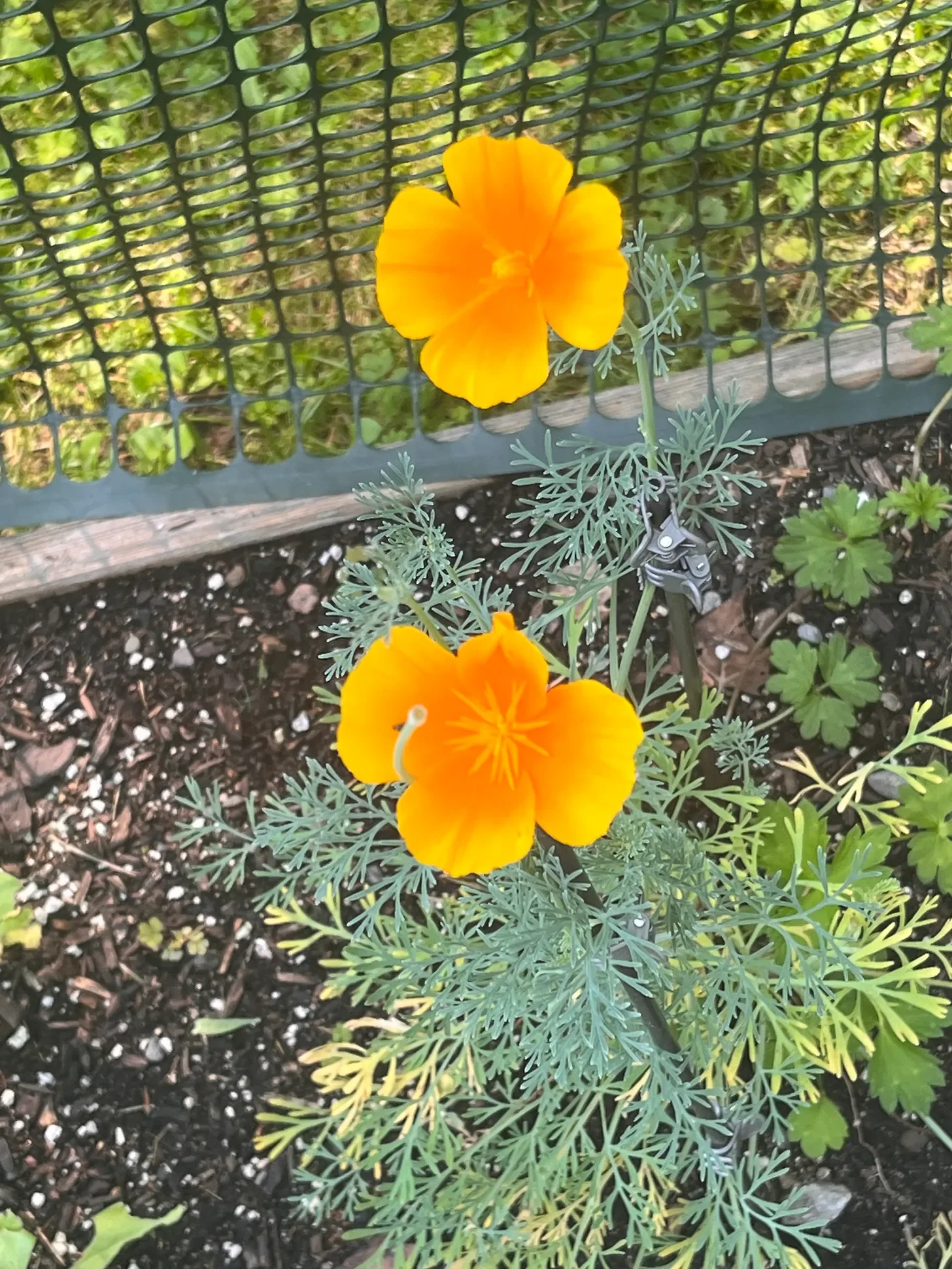
California Poppy I grew a few years back
(Full sun and no shade to papaver somniferum, from whom humanity isolated morphine, codine, and yes, heroin. Like, it's an incredibly beautiful and important plant.)
Again, California Poppy isn't associated with addiction. It's just in the same family.
California Poppy could promote restful sleep, and it also may be linked to a change in dreaming habits. If you interpret your dreams this could be of interest or a complete turn off.
If you live with a condition that alters your relationship to dreaming, like CPTSD, California Poppy may further alter it. I live with CPTSD and sometime California Poppy is very helpful, sometimes it's activating for me. Just FYI.
My best experiences with California Poppy were with it fresh out of my garden. This was a more spiritual way of working with it than medicinal, since the alkaloids that make California Poppy soperific are best extracted in tincture.
Yet for those dream explorers who perhaps don't want to work with California Poppy internally, it can be added to a dream steam before bed, or a flower essence.
As ever, this isn’t medical advice. I strongly encourage you to talk to your doctor about potential medication interactions before taking nervine herbs.
If freaky dreams aren't your thing, maybe some of the herbs in Night Light are.
You probably already have a relationship with Chamomile, another nervine relaxant and a carminative at the same time. Carminatives can help with digestion.
Since Chamomile is also sweet, bitter, and cooling it may be helpful if you have acid reflux that kicks up right before bed. It could also be great if you have general night time indigestion that impacts sleep.
Skullcap is among my favorite nervines of all time, because as one of my teachers, Empress Karen Rose, taught us, it's for people who are "very mental." I'm a grade A overthinker and it fucks up my sleep. It's also not for people on mental health or seizure meds.
Finally, we have Passionflower. This week, I’ll write more about Passionflower on my blog — which will probably mean a reel too.
Long story short, Passionflower is an analgesic like California Poppy, and also soporific. It is indicated for issues of the generative organs and may also be helpful for those experiencing nerve pain. Newer studies show encouraging possibilities with regards to Passionflower and anxiety disorders and addiction recovery.
In a world as fucked up and anxiety producing as this one, where burnout is incentivized and pretty much inevitable for most of us because of capitalism, plant allies can help us prioritize and tend to our rest.
Again, I don’t think sleep itself is resistance, but neither is sharpening a sword. It helps us stay ready to resist, but it is our right and our duty whether we win (which we will) now or later.
We all have personal constitutions that respond differently to what we put in our bodies — herbs are no exception. If you would like to work with me one on one, my books are open. I’d love to help you figure out what works best for you and your goals.


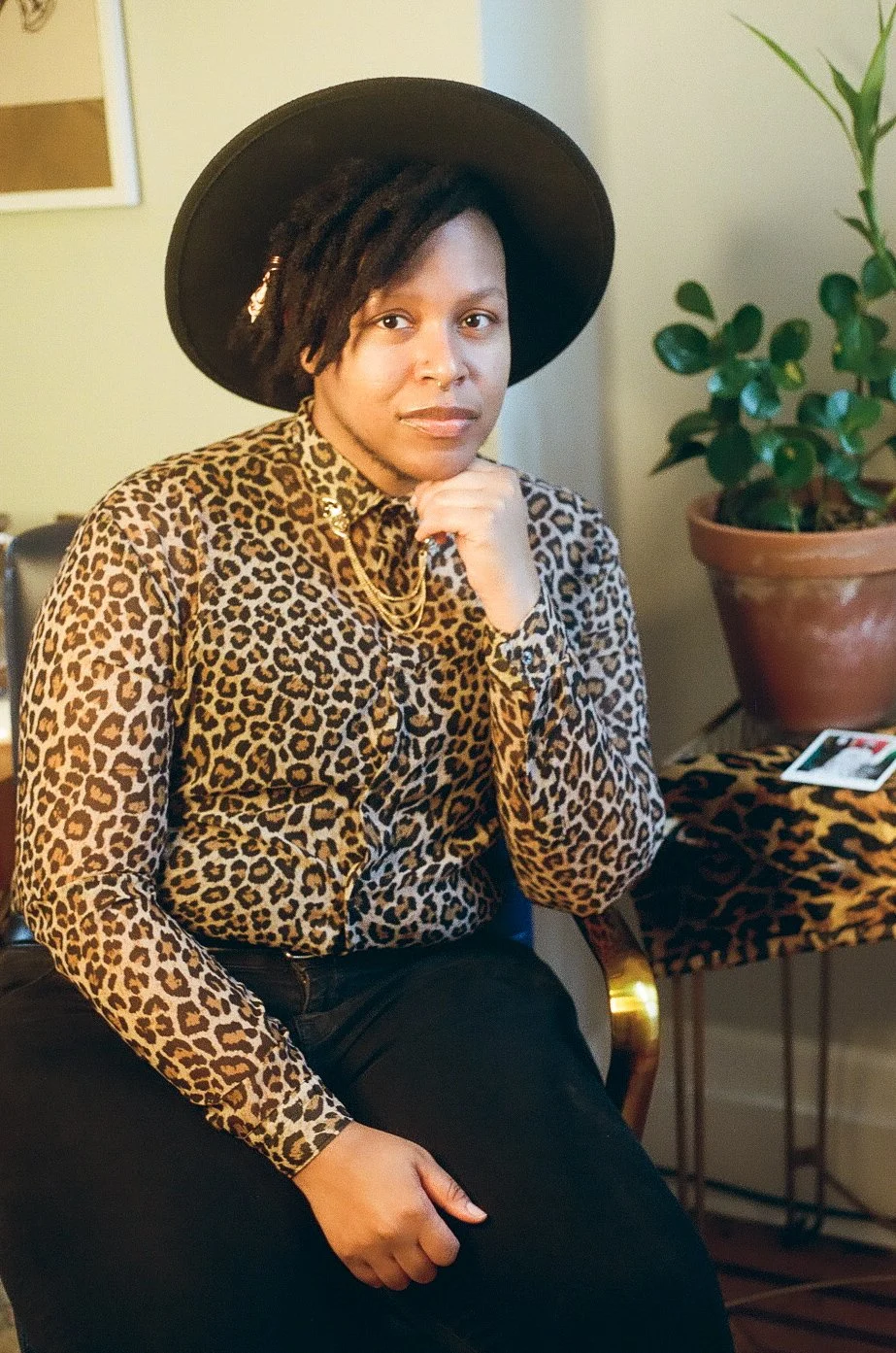
Hey, I’m Cyrée
I’m a rootworker, diviner, and clinical herbalist. I believe that spirit work is an essential part of all movements for justice. I hope you’ll take a look around, there are plenty of opportunities here to deepen your connection with your gifts (with my guidance.)

Here's how to activate the Ace of Pentacles to find some stability in a soul sucking world.